Why Cards Exist

Playing cards have been around for over 600 years, and their existence can be traced back to several key human needs and societal factors.

1. Entertainment and Social Bonding

The primary reason cards exist is for entertainment and social connection. Card games like Seep have historically provided a way for communities to bond, share stories, and compete in a friendly environment.

What This Means in Seep Strategy

  • Opponent Psych: Socializing reveals a player's baseline behavior. Recognizing if an opponent is naturally aggressive or cautious helps you predict their "House" building tendencies.
  • Partner Synergy: In 4-player Seep, you must anticipate your partner's needs without verbal cues, creating a shared tactical "bond" through the cards played.
Player Insight: The strongest Seep partners don't need to speak; they communicate through the "sacrificial" 2s and 3s they throw to signal a house-build.
Core Principle: Use social cues to establish a baseline for your opponent's risk tolerance.

2. Portability and Accessibility

Before the digital era, card games were the ultimate portable entertainment. A small deck of cards could provide hours of fun and challenge for a group of people, making it an ideal choice for travelers, soldiers, and families alike.

What This Means in Seep Strategy

  • Floor Density: In Seep, "Portability" translates to "Floor Availability." If the floor has many low-value cards, it is accessible for building large, multi-card Houses.
  • Card Mobility: Efficiently moving cards from the floor to your capture pile is the essence of Seep. Ensure your hand has the right "Keys" (matching numbers) to unlock the floor's points.
Player Insight: Always keep a diverse range of cards in your hand; an "inaccessible" hand is one that can't match any floor total.
Core Principle: Maintain card diversity to ensure you can interact with any floor state.

3. Mathematical Challenge and Probability

Playing cards provide a fascinating platform for exploring mathematical probability and strategy. Each card has a fixed value, and the deck structure allows for endless combinations and possibilities, challenging the human mind to think and plan ahead.

What This Means in Seep Strategy

  • Point Calculation: Spades and the 10 of Diamonds are the target. Strategic math requires calculating if "fishing" for a Spade is worth the risk of leaving the floor open for a "Seep" (sweep).
  • House Math: Predicting if an opponent can "break" your house of 9 depends on the probability of them holding one of the remaining 9s.
Player Insight: Seep is a game of 100 points. If you've captured 51, your strategy must pivot from "Offense" to "Restriction" to starve your opponent.
Core Principle: Prioritize high-probability captures over high-risk, high-reward "Seep" attempts.

4. Cultural Expression and Symbols

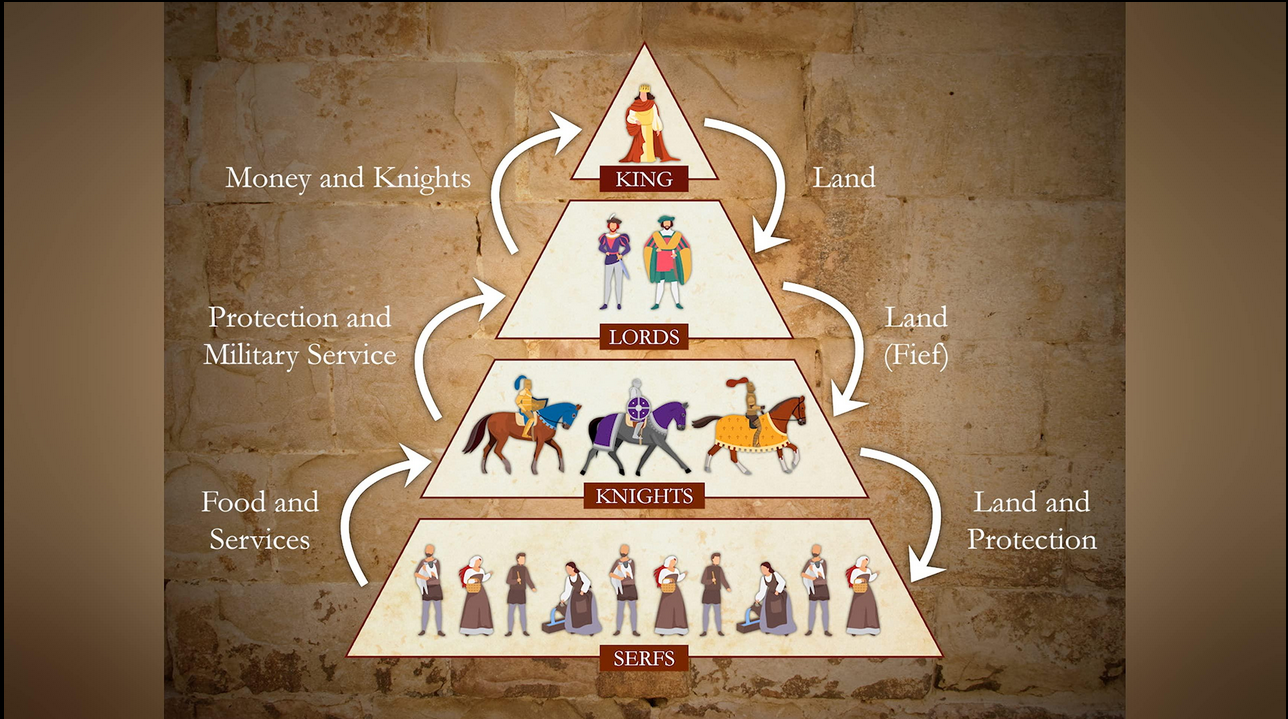
Cards have historically been used as a way to express cultural symbols, hierarchies, and values. The face cards (King, Queen, Jack) and the four suits are laden with cultural meaning and have evolved over time to reflect the societies that play them.

What This Means in Seep Strategy

  • Symbolic Value: Spades are the "Military" suit in Seep, commanding the highest points. Every Spade captured is a symbolic victory that demoralizes the opponent's score.
  • Hierarchy of Capture: The King (13) is the ultimate anchor for a House. Understanding this hierarchy allows you to build structures that are harder to contest.
Player Insight: Capture the Ace of Spades (9 points) early to set psychological and mathematical dominance over the round.
Core Principle: Respect the hierarchy of the deck; focus your military (Spades) on capturing the wealth (Diamonds).

Simulating Strategy: The Safe Battleground

At their core, playing cards exist as a medium for "Abstracted Conflict." Throughout history, humans have sought ways to simulate the thrill of battle, the tension of negotiation, and the satisfaction of conquest without the actual physical risks. A deck of cards is a masterfully engineered system for this simulation.

In Seep, this conflict is centered around the "Floor." The cards are the soldiers, and the "Houses" (Ghar) are the fortifications. By engaging in these miniature mathematical wars, our ancestors developed cognitive tools for long-term planning and tactical response. Cards exist because they provide a safe arena for the human competitive spirit to flourish.

What This Means in Seep Strategy

  • Fortification Strategy: Your Houses are your bunkers. Building a House of 12 is a simulation of establishing a stronghold that requires a specific "weapon" (a 12) to infiltrate.
  • Floor Control: Controlling the floor is like controlling the terrain of a battle. If you "clean" the floor with a Seep, you are effectively resetting the battlefield.
Player Insight: Think of every discarded card as a scout; it reveals what you are willing to lose to protect your larger strategy.
Core Principle: Treat the floor as contested territory; never leave a point-bearing Spade unprotected.

The Great Democratizer of Entertainment

Accessibility Over Luxury

Before the printing press, entertainment was often a luxury of the elite. However, once paper-making techniques improved, a deck of cards became one of the most cost-effective ways to deliver entertainment to the masses. One deck of 52 cards can host thousands of different games, from simple luck-based rounds to the complex, high-IQ strategy of Seep. This "High Density of Fun" is why cards survived where other, more cumbersome games faded away.

A Universal Language

Cards transcend language barriers. You don't need to speak the same language as your partner to play a professional game of Seep; you only need to understand the language of the numbers and suits. This universal symbolic system is why cards exist as a bridge between cultures, traveling from China to the Middle East, into Europe, and deep into the heart of the South Asian subcontinent.

What This Means in Seep Strategy

  • Resource Parity: Success isn't about luxury; it's about how you utilize "cheap" cards (the 2s, 3s) to capture the "expensive" ones (Spades and 10 of Diamonds).
  • Universal Tactics: Strategic depth comes from using universal symbols to restrict your opponent's options. A 9 is a 9, regardless of class.
Player Insight: Even the lowest card (a 2 of Clubs) can be the "bridge" that allows you to capture a high-point Spade.
Core Principle: Value every card; the smallest resource can be the key to the largest capture.

Cognitive Evolution: The Mental Gym

We often ask why cards still exist in the age of virtual reality and high-definition video games. The answer lies in the specific "Mental Load" they provide. Card games like Seep are a workout for the prefrontal cortex. They require:

Memory Training

Tracking 52 individual items through various states of play (hand, floor, capture).

Mental Arithmetic

Constant addition and combination of values to find optimal capture paths.

Game Theory

Predicting opponent behavior and partner intent based on incomplete information.

What This Means in Seep Strategy

  • Memory Tracking: If you know all four Kings have been played, your House of 13 is mathematically invincible.
  • Predictive Modeling: Based on previous captures, you can "model" the opponent's hand. If they've picked up two 10s, they are likely hunting the 10 of Diamonds.
Player Insight: The best Seep players don't just see the floor; they see the "ghosts" of the cards already played to predict what remains.
Core Principle: Use memory to reduce uncertainty; an invincible house is one where all counter-cards are accounted for.

The Digital Shift: From Portability to Permanence

Initially, cards existed for their **Portability**. They were the first "Handheld Games." Today, they exist in the digital realm for **Permanence** and **Fairness**. In the Seep Arena, we preserve the traditional reason for cards—social bonding and mental challenge—while removing the physical limitations.

Digital cards cannot be creased, lost, or marked. They exist as pure mathematical entities, ensuring that every game played is perfectly fair. By moving cards from the pocket to the browser, we are ensuring that the reason they exist—to bring people together for intellectual competition—remains valid for the next 600 years.

What This Means in Seep Strategy

  • Precision Play: In the digital Seep Arena, strategy shifts from "avoiding math errors" to "perfect tactical execution."
  • Opponent Analysis: Digital platforms allow for rapid "Seep" cycles, letting you face diverse playstyles and hardening your defensive strategies.
Player Insight: Digital play allows you to experiment with "High-Risk" house builds to find the exact threshold where an opponent's restriction fails.
Core Principle: Embrace digital precision to focus purely on the psychological and tactical layers of the game.

Ready to test your skills?

Experience why this ancient concept has survived for centuries. The Seep Arena is the ultimate digital evolution of the classic card game experience.